News & Recent Releases

1002, 2026

Report: Meeting the Health Needs of Rural America

February 10, 2026|

A new report released by the Aspen Health Strategy Group identifies opportunities for health sector leaders to narrow the health gap between the 50 million Americans who live in rural areas and those who do not. The report is unsparing in its depiction of health disparities in rural areas, which include higher mortality rates, a greater prevalence of chronic conditions and disability, and more infectious diseases. Rural residents are also significantly more likely to report problems affording their medical bills and more likely to carry medical debt when compared to urban residents.
1002, 2026

Meeting the Health Needs of Rural America

February 10, 2026|

A new report released by the nonpartisan Aspen Health Strategy Group (AHSG), an initiative of the Health, Medicine & Society Program of the Aspen Institute, identifies opportunities for health sector leaders to narrow the health gap between the 50 million Americans who live in rural areas and those who do not.

2801, 2026

Announcement: Intentional Spaces Roadmap

January 28, 2026|

Johns Hopkins’ International Arts + Mind Lab Releases the Intentional Spaces Roadmap, an Evidence-Based Strategy for Designing Environments that Support Health and Wellbeing

The Center for Applied Neuroaesthetics at Johns Hopkins School of Medicine today announced the release of the Intentional Spaces Roadmap—a strategic plan of action to build a new interdisciplinary sector, or field, called neuroarchitecture that incorporates translational research and evidence-based practices to envision, design, and build environments, both physical and virtual, that intentionally support human health, connection, creativity, learning, and wellbeing.

Research across neuroaesthetics, psychology, architecture, and design increasingly shows that elements such as light, sound, texture, form, and nature shape how we feel, think, heal, and connect with others.

Yet despite a growing evidence base, real-world application of design insights remains largely limited—and the sector still faces challenges related to translation, methods, structure, and communication.

The Intentional Spaces Roadmap brings these insights together in a clear, coherent framework and offers practical strategies, shared principles, and a common language to guide evidence-informed space design from healthcare to education, urban planning to community development.

The Roadmap, a publication of the Intentional Spaces Initiative, builds on the foundational work of the NeuroArts Blueprint Initiative, a partnership of the IAM Lab and the Aspen Institute’s Health, Medicine & Society Program, and the broader neuroarts movement—rooted in neuroaesthetics and other ways of knowing—to advance intentional space design as a tool for human flourishing. The Intentional Spaces Initiative and Roadmap are supported by the Pedersen Foundation. The IAM Lab is also part of a consortium of organizations assembled by the Foundation called The Pedersen Collaborative, which includes the Milken Institute, HKS Architecture, and Academy of Neuroscience for Architecture. The Collaborative is dedicated to advancing evidence-based design.

Intentional Spaces Overview

In November 2023, the IAM Lab convened a pivotal summit that brought together over 300 leaders to align research, architecture and design practice, and community voices; a subsequent field survey gathered additional insights that helped shape the Roadmap’s recommendations.

We are in, or move through, spaces every moment of our lives, and we now know that our environments have powerful effects on our physical and mental health,” said Susan Magsamen, Executive Director of the IAM Lab. “The importance and momentum of this work have never been more critical. From individual wellbeing to community impact, across every sector of society, the implications are profound. Intentional spaces represent a cost-effective, life-changing opportunity to improve health, resilience, innovation and quality of life at scale. This is not a dream or wishful thinking. There are organizations already putting these ideas into practice and leading the way and we are offering a roadmap and resources to accelerate this movement.”

A practical agenda to close the evidence-to-practice gap

Even with accelerating research, evidence-based design is not the norm. The Roadmap is intended to help shift thinking from siloed fields to collective action—informing environments that are not only functional or beautiful, but deeply supportive of human health and wellbeing.

Roadmap recommendations

Drawing on cross-sector input, the Intentional Spaces Roadmap outlines a set of clear, actionable recommendations to:

  • Enhance basic and translational research and diverse ways of knowing including through pilot programs
  • Establish career pathways that incorporate this new neuroaesthetic knowledge
  • Expand methods and technology to advance intentional spaces
  • Strengthen messaging and communication for multiple stakeholders
  • Generate economic and impact evidence
  • Advance policies that support intentional space design
  • Build capacity, leadership, and inclusion

Implementation strategies and next steps

To translate recommendations into measurable impact, the Roadmap organizes field-building efforts around three core strategies: Building Evidence, Building Infrastructure, and Building Community. An implementation timeline based on these core strategies will be released in spring 2026.

Companion resource: Foundations

To support uptake across audiences, IAM Lab is also releasing Intentional Spaces: The Power of Place–Foundations, a practical, sector-wide guide for stakeholders who create the built environment. Foundations, developed in partnership with Thermengruppe Josef Wund, White Mirror, and The Future Laboratory, brings together research, core concepts, design strategies, and interdisciplinary insights, and includes frameworks for collaboration and recommendations for integrating principles into everyday work.

Resource links: Roadmap and Foundations

Intentional Spaces Roadmap

Intentional Space Foundations

About the International Arts + Mind Lab (IAM Lab)

The International Arts + Mind Lab, Center for Applied Neuroaesthetics (IAM Lab) is a multidisciplinary research-to-practice initiative at Johns Hopkins University that is accelerating the field of neuroarts through the study of neuroaesthetics. The IAM Lab is pioneering Impact Thinking, a translational research approach designed to solve intractable problems in health, wellbeing, and learning through the arts. The IAM Lab brings together brain scientists and practitioners in the visual and performing arts, architecture and design, and creative arts therapies to foster collaboration and research. The goal of the IAM Lab is to empower the global neuroaesthetics community to change the way we think today and enhance the way we live tomorrow.

About the NeuroArts Blueprint Initiative

The NeuroArts Blueprint Initiative is a partnership between the Johns Hopkins International Arts + Mind Lab, Center for Applied Neuroaesthetics (IAM Lab) and the Aspen Institute’s Health, Medicine and Society (HMS) Program. Co-directed by Susan Magsamen, MAS, executive director of IAM Lab, and Ruth J. Katz, JD, MPH, executive director of the HMS Program, the Initiative bridges the gap between the arts and sciences to advance health and well-being by promoting innovative research, developing evidence-based practices, and raising public awareness of the arts’ potential to enhance health. The Initiative also created and maintains the Neuroarts Resource Center, a first-of-its-kind online platform designed to connect, inform, and inspire the growing neuroarts global community.

1601, 2026

Report: Realizing the Potential of the Science Community to Support Rising Generations in STEM

January 16, 2026|

This report, developed as part of the Aspen Institute Science & Society Program’s 2025 roundtable series, synthesizes insights from practitioners in K–12 education, higher education, science research, professional associations, science communication, and civic science. The project builds on Science & Society’s long-standing informal science education work, including the award-winning Our Future Is Science (OFIS) youth initiative.

1601, 2026

Realizing the Potential of the Science Community to Support Rising Generations in STEM

January 16, 2026|

A recent report by the Science & Society Program discusses fundamental questions about recent and rapid policy shifts within the federally-funded research and higher education ecosystems, as well as our our nation’s social contract for science, originally articulated in 1945 through Vannevar Bush’s groundbreaking Endless Frontier report.

1911, 2025

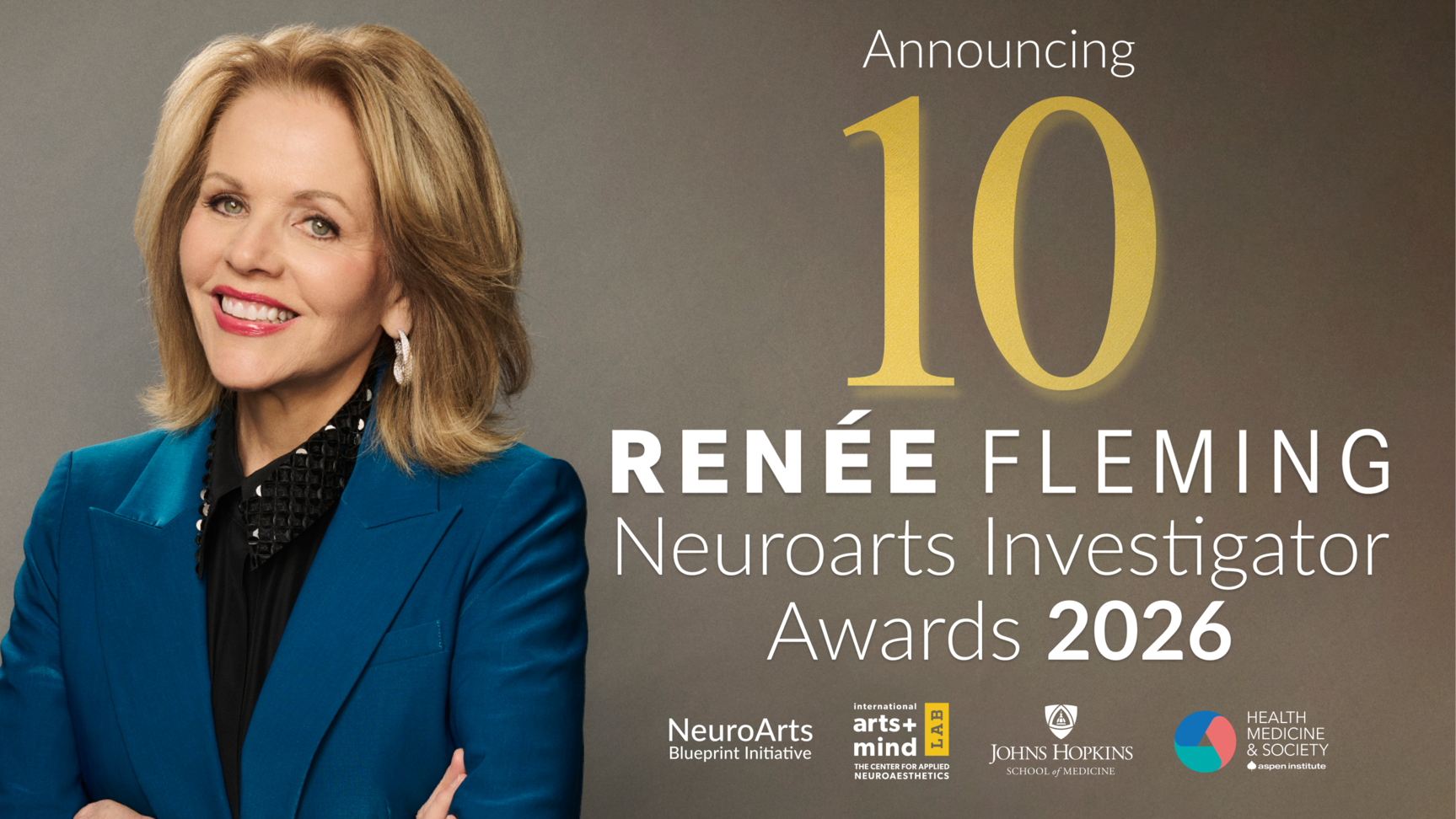
Request for Proposals: Third Annual Renée Fleming Neuroarts Investigator Awards to Advance Arts and Health Research

November 19, 2025|

NeuroArts Blueprint

The Renée Fleming Foundation in partnership with the NeuroArts Blueprint Initiative is offering year two of the Renée Fleming Neuroarts Investigator Awards. The Awards support innovative and collaborative research by early career researchers, designed to expand the evidence base of the emerging field of neuroarts and further the mission of the Neuroarts Blueprint Initiative. The mission of the NeuroArts Blueprint is to ensure the arts — and their use in all their many forms — become part of mainstream medicine and public health.

Go to Top